
1942
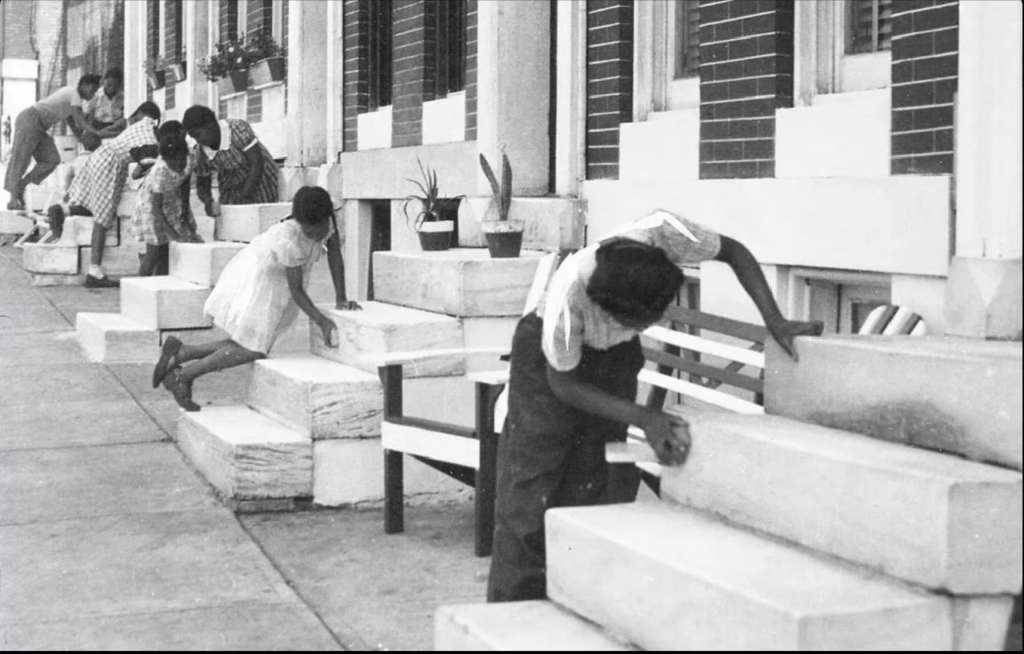
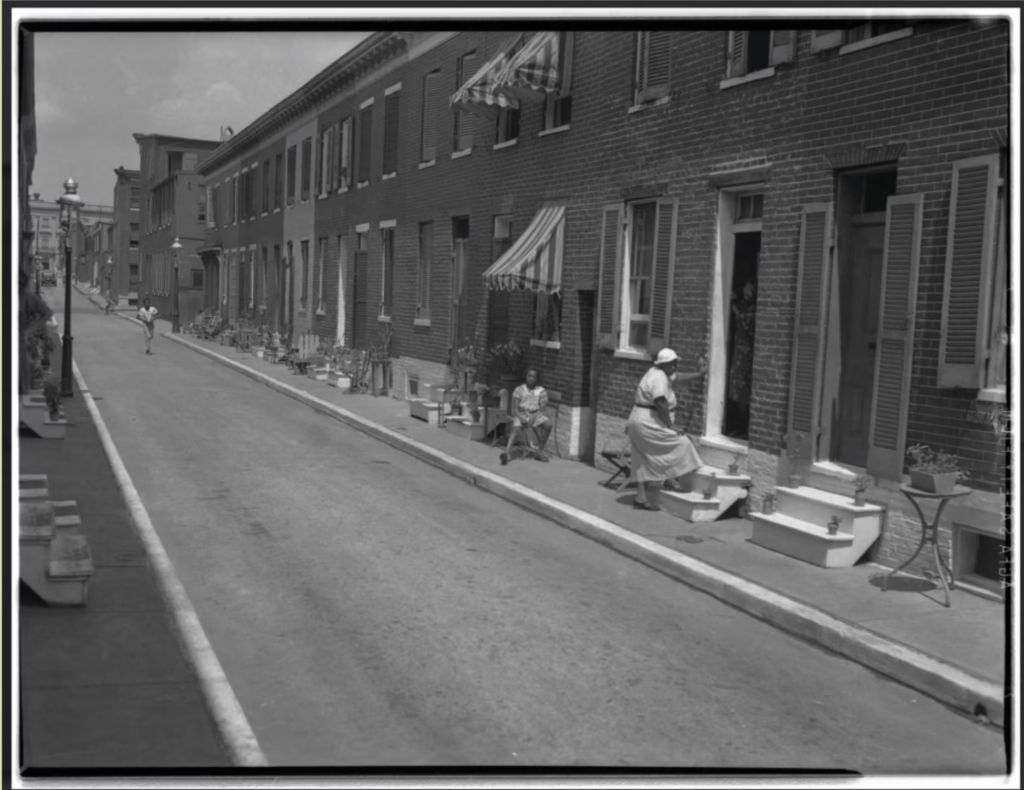
We begin the CJ Park story from an article in a 1942 article featured in Baltimore’s Afro-American newspaper. The caption read, “Baltimore Leads Clean Blockers.’’ The article goes on to reference Jean Mathews of the1300 block of Bruce Street and Fannie Carroll of the1400 block of Bruce Street as Block Captains.
Once Upon A Time
According to an article at afro-charities.org, the “Afro Clean Block is the oldest environmental program of its kind in the U.S.” It was founded in 1934 as a pro-gram to keep kids busy during the summer, and to keep our neighborhoods clean. Neighbors washed their stoops, painted door trim and planted flowers in planters made from recycled tires.
2006
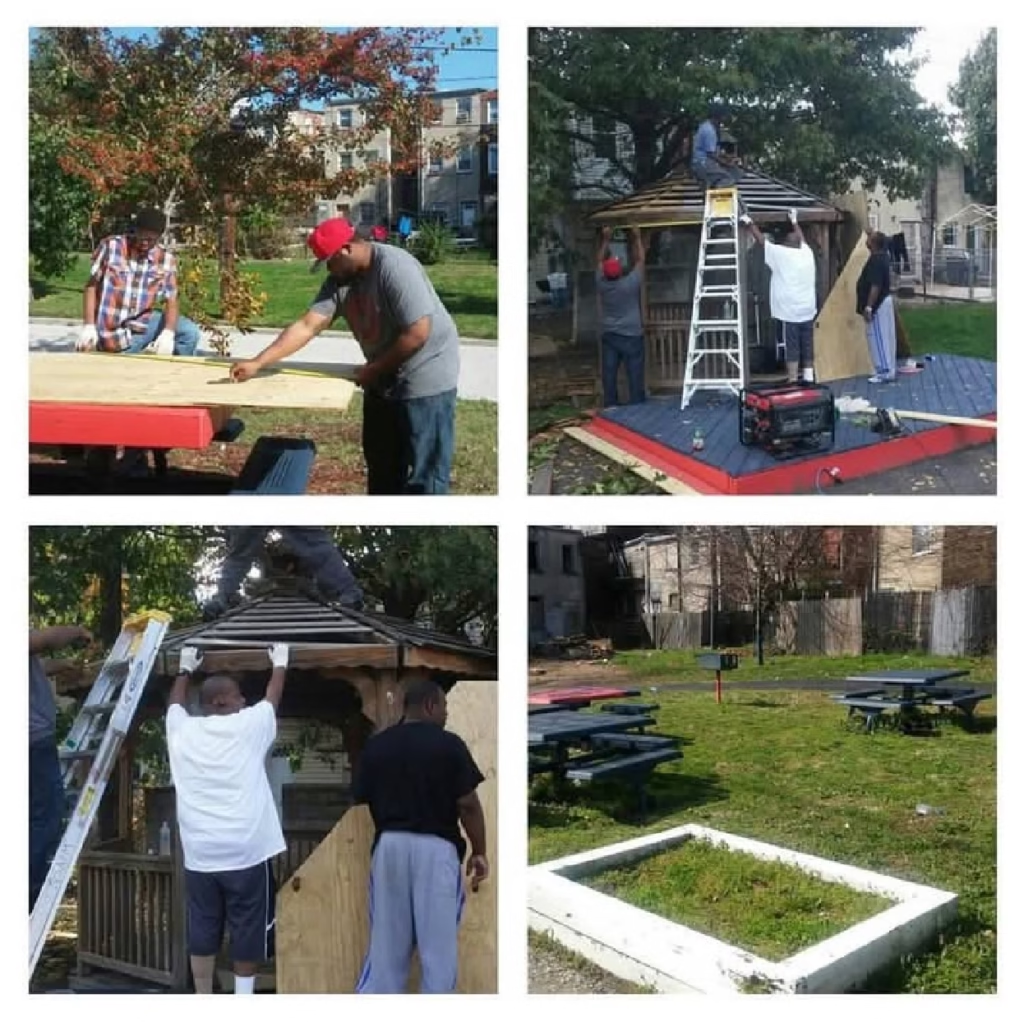
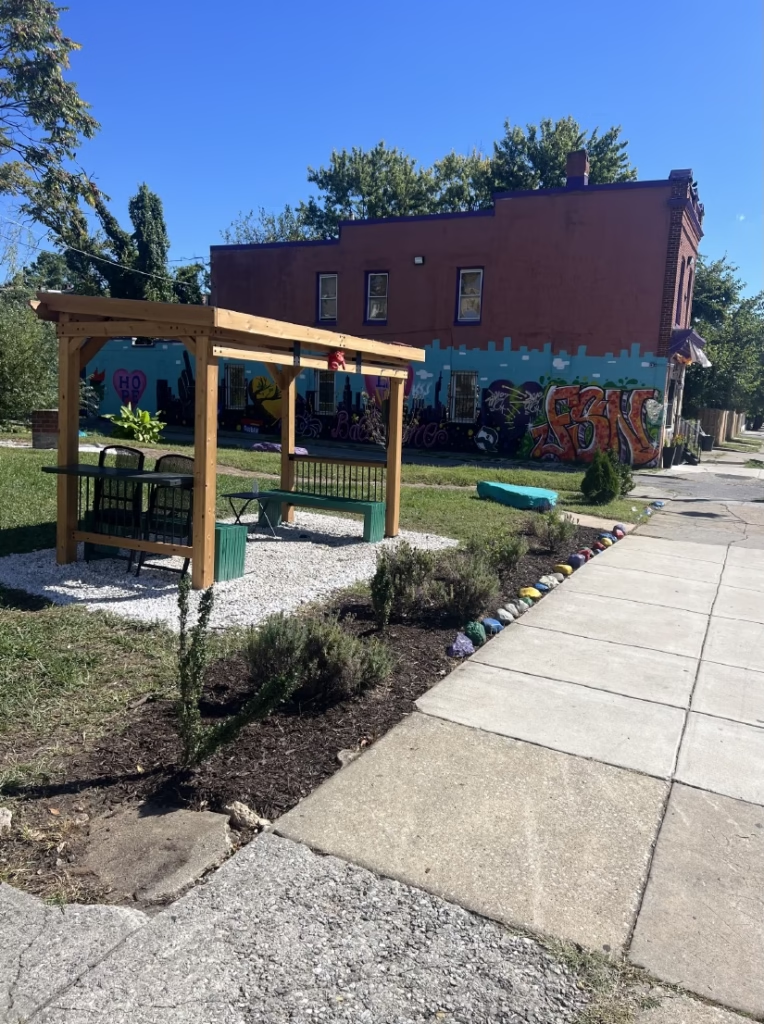
By 2006, the 1300 block of Bruce Street had become a dumping ground for discarded bricks, concrete, paper and wire… a neighborhood junkyard. The Baltimore Sun Paper reported in September of the same year that about 100 volunteers came together to transform the space into a community park.
Supported by several companies and nonprofit groups, which donated outdoor furniture, landscaping materials, design work and heavy equipment (among whom were Struever Bros. Eccles & Rouse; the Enterprise Foundation; Parks and People; and Neighborhood Design Center), Bruce Street Park was created.The article went on to quote comments from three West Baltimore community activists who spearheaded the effort:
“There is no area around here that has a park-like setting where people can come and sit down and enjoy themselves,” said Charles Johnson, Sandtown Habitat Homeowners Association chairman.
“It’s even better than I even imagined,” said Antoine Bennett, director of Eden Jobs, a training program on Fulton Avenue.
“To some people, it may not look like much,” said Roosevelt Boone, a member of the Resident Action Committee. “But to us, it means a great deal.”
2018
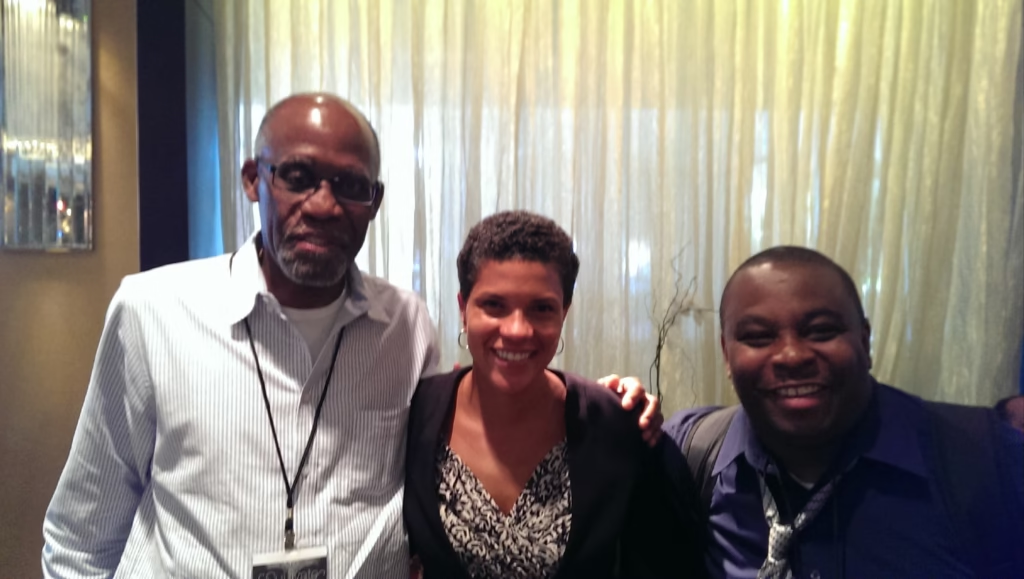
At a 2013 CCDA conference featuring Michelle Alexander, author of The New Jim Crow, Antoine Bennett and Wendall Holmes began talking about how they could combine efforts to reverse the devastating effects of mass incarceration in Sandtown. In 2014, Wendall Holmes became a property owner on theBruce Street Park and subsequently became interested in the long-term sustainability of the park and the even larger sustainability of the community; especially in the wake of the Freddie Gray tragedy in 2015.
The nonprofit, Charles Johnson Park Development Corporation was created in 2018 and Bruce Street Park was renamed CJPark, in honor of Charles Johnson, the deceased resident who spearheaded the 2006 project. CJPark’s mission?… expand the vision of Mr. Charlie and develop the vacant real estate and green spaces in the 13, 14 and 1500 blocks of North Bruce Street.
Today
Baltimore residents comprise a third of Maryland’s prison population and an estimated 10,000 people leave prison and return to Baltimore each year. Many return to Sandtown Winchester/Harlem Park, which has an incarceration rate eight times greater than the state average. According to Maryland’s Re-Entry Statistics, 40.5% of people released from prison in 2009 returned to prison by 2012. A 2015 Baltimore investigation reported, Sandtown-Winchester is the #1 community for incarceration (3% of the population), costing the state $17 million each year. In addition, Sandtown-Winchester has, 31% unemployment, over 31% of residents are in poverty, 35.6% homeownership, increased distribution/sale of fentanyl and Median Household Income of $23,000.
At the heart of Charles Johnson Park Development Corporation(CJPDC) is the intersection of Stable Housing and Workforce Development inclusive of a Returning Citizen population (men & women) seeking a long-term, fixed residence within Sandtown-Winchester. The CJ Park initiative is designed to ease the overwhelming transition obstacles of Returning Citizens by rediscovering and cultivating the individual human potential to become what they were created to be.
Rather than taking a trickle-down approach, CJ Park’s methodology is to focus onWorkforce inclusion, Housing Stabilization, along with Social Service Support to localize a home-grown ecosystem from the bottom-up.
Our community problems are big and require big solutions. Big solutions require big networks and collaborations. We believe our strategic thinking potential expands when we’re at the table sharing with other community stakeholders having the same objectives
[dflip id="988338"][/dflip]
- Join the Movement
Whether you’re walking your own reentry journey, supporting someone who is, or looking to help reshape what justice looks like—CJ Park is your home.